What EC tells you
Electrical conductivity indicates the total concentration of dissolved ions in the solution. It is useful for checking consistency between batches and for tracking changes in the root zone. EC does not tell you which individual nutrient is present or whether every element is balanced.
What pH tells you
pH describes how acidic or alkaline the solution is. In soilless cultivation, it matters because nutrient availability and root-zone chemistry are influenced by pH. A pH reading is therefore a management signal, not a diagnosis by itself.
Input and root-zone readings tell different stories
The feed solution describes what is being delivered. Drain or root-zone measurements provide information about what is happening after irrigation interacts with the substrate and roots. Looking at the direction of change over time is usually more useful than reacting to a single number.
Why there is no universal target
Useful EC and pH ranges depend on water quality, substrate, crop stage, cultivar, environment, irrigation strategy and product system. Manufacturer guidance, scaled to reservoir volume with the Feeding Calculator, is a starting point. Facilities should establish their own operating ranges based on documented crop response and consistent measurement.
Measure consistently
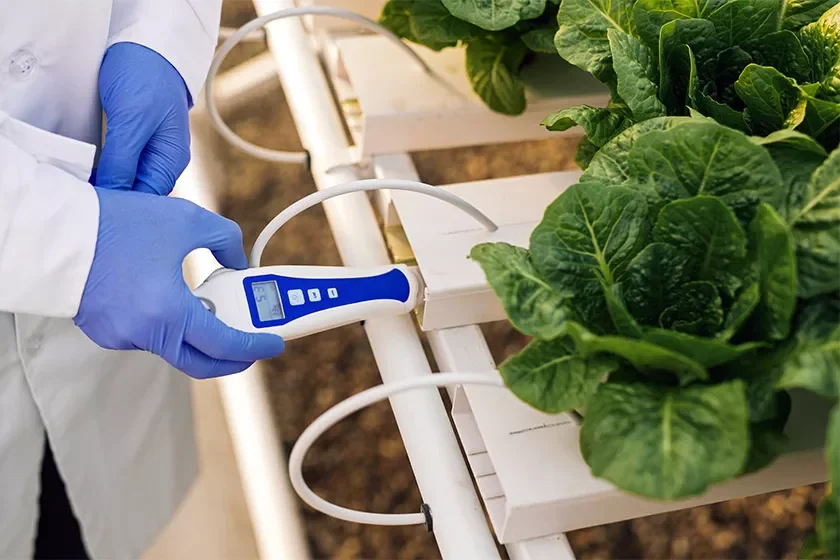
Use calibrated meters, consistent sampling points and a repeatable timing method. When measurements are taken differently each day, it becomes difficult to separate real crop trends from measurement noise.