
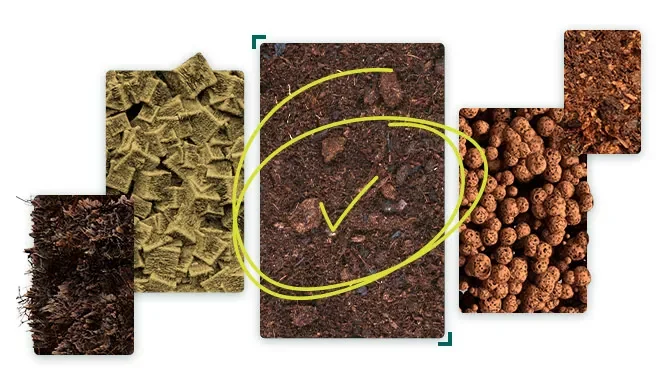
Coco: buffered and biologically derived
Coco has natural physical and chemical characteristics that influence water holding and nutrient behavior. Good-quality buffered coco can provide a forgiving root-zone environment while still allowing frequent irrigation and precise feeding.
Rockwool: inert and highly controllable
Rockwool is an inert substrate with predictable physical properties. Because it contributes little chemically to the nutrient solution, growers can manage irrigation and mineral nutrition with a high degree of control. That precision also means irrigation mistakes can show up quickly.
Irrigation strategy is the real difference
The substrate is only part of the system. Container size, root density, irrigation frequency, drain percentage, climate and crop stage all change the root-zone response. Coco often tolerates a wider operating window, while rockwool is frequently chosen when the facility wants tighter steering through irrigation.
Nutrient programs should match the substrate
A nutrient program formulated for coco should account for coco-specific behavior, while an inert-substrate program is intended for systems such as rockwool. Mixing approaches without understanding the root-zone chemistry can make troubleshooting more difficult.
Which system is better?
Neither is universally better. Coco can be attractive for operational flexibility and familiarity. Rockwool can be attractive for high-control facilities with strong irrigation management. The better system is the one the team can run consistently and measure accurately.